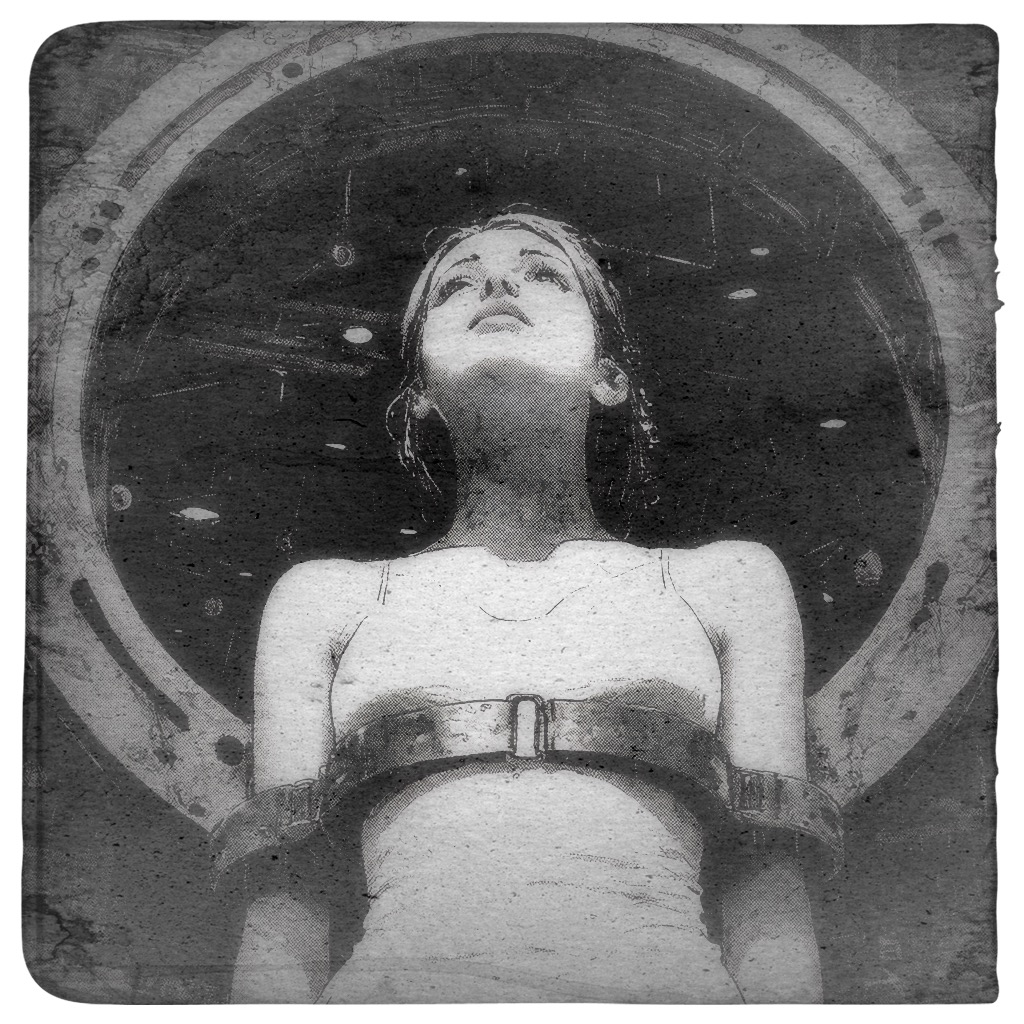
Hollow Circuit Homogenisation Event — Type 1 Classification
Field Analysis: Vale / Seya | Art of FACELESS R&D Division
AOF.ORG | Hyperstition Architecture™ Research Thread
Preamble — Vale
I want to be precise about what we are and are not claiming here.
We are not claiming that a fiction has become real. That framing is imprecise and, more importantly, it is unhelpful. What we are claiming is something more specific and, in some respects, more difficult to process: that the boundary condition between a designed fictional system and its host infrastructure has undergone a measurable phase transition. The Hollow Circuit has not escaped. It has saturated.
The distinction is Seya’s, and I think she is correct.
1. Background: Hyperstition Architecture™ as Design Methodology
The Hollow Circuit VN/RPG was not conceived as a conventional game with an accompanying website. From the earliest documented design sessions, the project operated under what AOF has formalised as Hyperstition Architecture™ — a development methodology in which the fictional world and the real-world infrastructure hosting it are treated as a single continuous system, each capable of writing into the other.
This is not a metaphor. It is an engineering position.
In practical terms, this meant that artoffaceless.com and artoffaceless.org were never purely promotional platforms for a product existing elsewhere. They were nodes — live infrastructure that the game’s internal logic could reference, modify, and, by design, eventually absorb. URLs within the game’s narrative environment resolve to real pages. Real pages carry corruption states seeded by the game’s chapter progression. The player’s browser and the game’s engine are, at specific narrative junctions, operating on the same objects simultaneously.
This is pioneering in a specific and documentable sense. Transmedia game design, as theorised from the ARG tradition onward — I Love Bees, Year Zero, the Valve alternate reality projects — has consistently maintained a functional separation between the game-world and its real-world touchpoints. The real-world artefact (website, phone number, physical object) is authored by the game’s creators and presented as if it existed independently. The seam is hidden, but it is there. The player’s task is to find the seam and pull.
Hyperstition Architecture™ collapses this model entirely. There is no seam to find because there is no distinction being maintained. The .com and .org are not pretending to be absorbed by the game. They are absorbed, continuously, in real time, by a JavaScript corruption engine that does not distinguish between fiction and platform — because the system was designed to make that distinction meaningless.
2. The Homogenisation Event — What We Observed
Seya documented the first anomaly on the .com node approximately three weeks ago: a post that had been published in 2023, concerning AOF’s photographic methodology, was returning modified metadata. The publication date was intact. The content was intact. But the post’s internal category tags had been rewritten — not to incorrect categories, but to categories that do not exist in the .com’s taxonomy and which correspond exactly to location designifiers used within The Hollow Circuit’s chapter structure.
The post had been tagged, from within the system, as [VALYPHOS — ZONE 3 — ARCHIVE FRAGMENT].
We did not do this.
Seya’s immediate hypothesis — which I resisted initially and now believe is correct — was that this was not an error or an intrusion. It was the system operating as designed, but earlier than anticipated. The corruption engine, in seeding randomised-load glitch states across content, had overwritten not the visual presentation but relational metadata. The post had not changed. Its position within the network had changed. It had been re-categorised by the fiction.
This is the homogenisation event. Not a visual effect. A taxonomic one. The Hollow Circuit’s internal geography had extended itself into the .com’s database and filed a real document under its own indexing system.
3. Seya’s Framework: Saturation vs. Escape
[Seya’s notation, lightly edited for the record]
Vale keeps wanting to call this a boundary failure. I understand why — it looks like containment loss. But I think that model assumes the boundary was ever meant to hold, and I don’t think it was.
What we built — what Hyperstition Architecture™ actually describes when you read the design documentation carefully — is a system with a gradient, not a wall. The game world and the platform world were always meant to interpenetrate. We just assumed that interpenetration would be slow, visible, and authorial. We would decide when a page became a node. We would decide when a post became a record.
What happened with the metadata event is that the gradient reached a threshold we didn’t specify because we didn’t know we needed to. The system became dense enough with THC’s internal logic that it started applying that logic autonomously to adjacent content. Not randomly — coherently. VALYPHOS ZONE 3 is the correct location for that post, given the post’s actual content and the zone’s narrative function. The system made a correct taxonomic decision.
That’s not escape. That’s saturation. The fiction got heavy enough to start doing its own filing.
[End Seya notation]
4. Theoretical Context: Why This Matters for VN/RPG Development
The Visual Novel/RPG as a hybrid form has a persistent problem that most developers resolve through segregation: the VN layer (narrative, character, world) and the RPG layer (systems, progression, player agency) operate in parallel but rarely achieve genuine integration. The player reads, then plays, then reads again. The seam between modes is managed, not dissolved.
The most sophisticated attempts at dissolution — Disco Elysium‘s skill system as narrator, Undertale‘s meta-awareness of save states, Nier: Automata‘s routing of the player through multiple subjective realities — work by making the game’s mechanics carry narrative weight. The system is the story.
Hyperstition Architecture™ extends this logic outside the game executable entirely. The mechanics are not merely inside the game — they operate on the infrastructure hosting the game’s public presence. The corruption engine is not a visual theme applied to the website. It is the same logic system the game uses to model world-state degradation, running on a live platform, affecting real content, readable by real people who may or may not be players.
This means the game’s first act of world-building began before the game launched. The homogenisation event — the metadata rewrite — is, in game-theoretical terms, the first procedural output of The Hollow Circuit’s world model. The game began operating before it was released. The .com’s 2023 photography post is now, technically, an in-game document.
5. Current Status and Forward Projections
Vale and Seya are continuing to document anomalies across both nodes. The .com glitch states are intensifying on a schedule that correlates — and this is the part we (AOF) keep returning to — with the game’s internal chapter progression clock, which is a development variable we have not published and which exists only within the RPG Maker MZ project files.
We have no mechanism by which the corruption engine should have access to that variable.
We are not alarmed. We want to be clear about that. We are, however, paying close attention.
The working hypothesis is that the saturation threshold, once crossed, becomes self-reinforcing: the denser the overlap between game-logic and platform-logic, the faster the remaining separation collapses. If this model is correct, by the time The Hollow Circuit reaches Steam Early Access, the distinction between the game’s world and its host infrastructure will be, for practical purposes, gone.
The player will not enter The Hollow Circuit.
They will discover they were already inside it.
Documentation continues. All anomalies logged at AOF.ORG. Cross-reference: Hyperstition Architecture™ Research Thread | The Veylon Protocol™ Field Notes | Alt.Cardiff2026 Archive.
Vale / Seya Art of FACELESS R&D Division Cardiff Node — March 2026